We translated this article from Wildcat no.115 – further background can be found here…
Phase 3
Less than three years ago, a broad-based movement shook the Iranian regime to its core. It was led by women and featured entirely new slogans. Despite months of struggle and considerable support from abroad, it ultimately achieved nothing more than a more liberal approach to the dress code. The repression was severe.
Because living conditions for the majority are getting worse and worse, whilst the corrupt ruling class visibly lives in luxury, there were repeated smaller protests by workers, pensioners and others, which went largely unnoticed internationally. Six months after the Twelve-Day War in June 2025 and the reimposition of tougher sanctions, a protest movement began in December that spread across the whole country within days. The centres of the movement were the poorest regions and the outskirts of the major cities.
The US government saw an opportunity for massive intervention. Reza Pahlavi, the son of the last Shah who had been living in exile in the US since 1979, called for an uprising on the nights of the 8th and 9th of January. Huge crowds poured into the streets. The monarchists saw this as a ‘national revolution’, whilst the regime labelled it a ‘coup’ and ‘terrorism’. The Islamic Republic shut down the internet and other communication channels and carried out the most heinous massacre in the country’s history on the streets.
On the 28th of February, Israel and the US began their bombing campaign. This brought all movements in Iran to a standstill. On the very first day, 110 schoolgirls died in the attack on the primary school in Minab; a total of 168 people were killed.
Economic developments under sanctions
In the final months of 2025, the Iranian currency plummeted. As a result, inflation rose to 42 per cent in December, and for foodstuffs even to 72 per cent compared with the previous year. US Treasury Secretary Bessent claimed that Washington had caused a Dollar shortage in Iran in order to destabilise the Iranian Rial and trigger protests in Iran.
At the end of December 2025, President Peseschkian presented his new budget. The government had decided to abolish the preferential exchange rate for oilseeds, fertiliser and animal feed as well. Instead, 80 out of 93 million Iranians receive one million tomans per month for nine staple foods, credited to their payment cards. [1] Following the announcement of this decision, prices for meat, poultry, eggs and pasta rose sharply, whilst the price of vegetable oil tripled.
Exchange rate fluctuations and supply shortages caused by international sanctions are threatening the livelihoods of over four million small shop-owners and their families. After wage workers and salary earners, they make up the largest proportion of households. The country’s water crisis has also contributed to the social unrest.
Protests in three phases
On the 28th of December, retailers of electronic goods and smartphones closed their shops and protested on the streets of Tehran for several days. The regime deployed water cannons and tear gas.
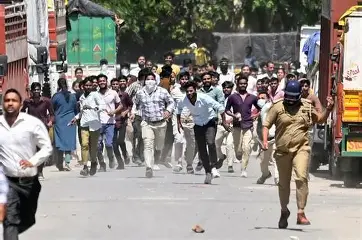
Subsequently, in small towns far from Tehran, the second phase of protests began, which was qualitatively different, featuring street barricades, attacks on banks and retail chains, and attempts to occupy government buildings or police stations. Within two weeks, the protests had spread to over 682 locations in 203 towns and 55 universities across the country’s 31 provinces. The boundaries between economic and political demands became blurred. [2]
The regime now struck back with far greater severity – particularly in Ilam Province, where the population is disproportionately poor and many deaths had already been recorded during previous uprisings. Here, the first fatalities caused by live ammunition were now reported.
From the second weekend onwards, the protests escalated in the major cities, particularly in Tehran, Isfahan and Mashhad, Iran’s second-largest city.
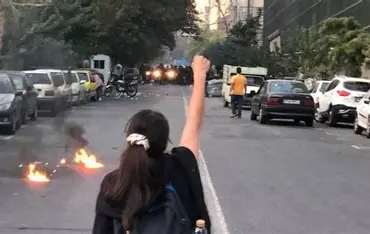
Pahlavi’s call to the streets marked a turning point. It ushered in the final phase of the protests; this phase lasted only two or three days. On the 8th of January, hundreds of thousands took to the streets in major cities and provincial capitals across the country, and some, fuelled by great anger, launched violent attacks against the forces of repression. Particularly on the 8th and 9th of January, a broad spectrum of society was present – that is, traditionalists and modernists, alongside many young people and all age groups from grandmothers to children. It is not unlikely that older people joined the protests following Trump’s verbal support, confident that the forces of repression would back down. The calls from Pahlavi, Trump, Netanyahu, Pompeo and co., and the increasingly widespread slogan “This is the final battle, Pahlavi is coming back” had created a climate that led some to believe an end to the regime was in sight – possibly through a military operation similar to that in Venezuela.
There are no reliable figures. Iranian intelligence and security agencies put the number of demonstrators at one and a half million. Eyewitnesses estimate far higher numbers. Some speak of five million, or just under eight per cent of the adult population. In some major cities, people had the streets firmly under their control until late into the night.
The repression
Only through indiscriminate killings was the regime able to maintain the upper hand. Snipers were also stationed on mosques and hospitals. In Rasht, the Grand Bazaar was burnt down during the massacre. Large sections of the protesters believed that the forces of repression had withdrawn. Trump wrote on X that Mashhad had been liberated – the BBC contradicted this. And indeed, what remained afterwards was scorched earth.
In response to Trump’s warnings that the US would come to the aid of the protestors should the regime shoot at people, Ali Khamenei spoke out on the 3th of January for the first time since the protests began: “The rioters must be put in their place.” The regime and its supporters viewed the protests as a war, as a repeat of the Twelve-Day War of June 2025.
Pahlavi also responded on the 2nd of February in an interview with CBS to the presenter’s question as to whether it was justifiable to send citizens to their deaths: “This is a war, and in a war there are casualties.”
This time, the regime had blocked all communication channels: landlines and mobile networks, SMS services and domestic messaging apps, channels run by regime loyalists on domestic platforms, group chats on websites, even the comments sections of commercial websites and domestic news agencies. Satellite reception was severely disrupted, and some satellite dishes were confiscated. The exile broadcaster Iran International became the dominant, indeed the only available, source of news in private households. The broadcaster is openly the voice of Israel as well as the exclusive mouthpiece of the Pahlavis.
The regime stated the total number of fatalities whose names were known as 3,117. The identity of 131 remained unclear. Khamenei divided the dead into four categories: ‘martyrs’ (regime members and supporters), ‘terrorists’, ‘confused individuals’ (who were also described as ‘our children’), and bystanders.
Time Magazine claimed on the 25th of January that the Iranian government had killed 30,000 people on the 8th and 9th of January alone. The only source named is a German-Iranian eye surgeon. The website The Dissident revealed that Amir Parasta is not a neutral doctor, but acts as a ‘technical adviser’ to NUFDIran, a lobby group supporting Pahlavi and a US- and Israeli-led operation for regime change in Iran. [3] Iran International puts the death toll at 36,500 – a figure that has been accepted and repeated by Trump and many in the West.
HRANA has reviewed more than 143,330 reports from exclusive and publicly available sources to provide verified figures. The results are presented in a detailed report. [4] They put the death toll at 7,007: of these, 6,488 were demonstrators, 236 children (counted separately), 76 civilians who were not demonstrators, and 207 members of the military and government forces. People were killed in all 31 provinces of the country; however, the death toll is significantly higher in certain provinces. The highest figures are 1,588 in Tehran, 753 in Isfahan, 622 in Mashhad, 419 in Gilan and 395 in Kermanshah. [5]
A further 11,744 cases are currently still being investigated by HRANA, which is difficult as many people have gone into hiding to avoid arrest. And since the US-Israeli bombings, millions of people have left Tehran and found refuge somewhere in the countryside.
25,846 civilians and 4,884 members of the military and security forces were injured. A total of 53,777 people have been arrested (555 children, young people and school pupils; 147 students). 369 forced confessions have been documented, along with 11,053 summonses. So far, four young people have been publicly executed after being charged in summary trials with the killing of security forces.
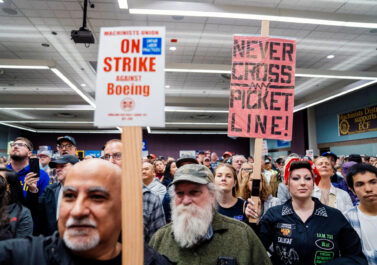
Since 2016, there have been repeated small-scale strikes, demonstrations and sit-ins by workers, pensioners and others demanding wages, salaries and better working conditions. There are around 4,000 such protests each year. In December 2025 alone, there were at least 97 workers’ protests and 33 strikes, as well as 115 gatherings of professional associations and trade unions. [6]
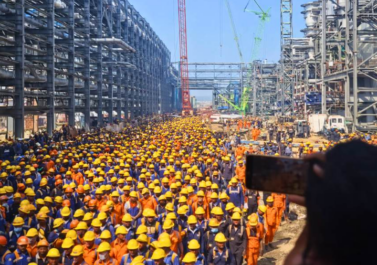
Since January, such struggles have faced massive repression. On the 9th of February, the Tehran Bus Drivers’ Union highlighted the mass arrest of workers in Asaluyeh: Workers who wanted to strike were arrested and locked up in their companies’ warehouses. Even the pro-government ILNA (Iranian Labour News Agency) reported that workers at the 10th refinery of the South Pars gas complex had gone on strike for the fifth consecutive day on the 7th of February in protest against their living conditions. The area is home to a large gas field, gas processing plants and refineries. Workers, who have moved here from the poorest parts of the country, work under severe health and safety risks. In recent years, they have repeatedly taken to the streets with strikes and protests against their working conditions, unfair wages and the agency labour system.
On the 18th of March, Israel carried out extensive attacks on precisely these facilities in Asaluyeh. The danger of toxic gas leaks, widespread air and water pollution, and the destruction of the region’s ecosystem now pose a direct and ongoing threat to the workers and hundreds of thousands of local residents.
The composition of the insurgents
The slogans were a step backwards compared to ‘Woman, Life, Freedom’ three years ago. They were predominantly male-dominated, authoritarian, anti-intellectual and anti-democratic: ‘This is the final battle, Pahlavi is returning.’ “This is the year of blood, Seyed Ali [Ali Khamenei, the Supreme Leader] will be overthrown.” “This is the final message: we have the entire system in our sights.” “All these years of crime – death to the Velayat [rule of clerical authority].” “Reza Shah, may your soul be blessed.” “Poverty, corruption, injustice – death to tyranny”. [7]
The Iranian newspaper Etemad claimed on the 28th of January that 77 per cent of the 11,252 arrested were under 30, and 27 per cent were under 18. Two-thirds of the protesters came from the middle and lower-middle classes, and one-third from the working class. 88 per cent had a lower secondary school qualification or lower. 60 per cent were small-scale self-employed (economically unstable) and only two per cent held a government job. 17 per cent were school pupils. Evidently, it was primarily proletarians and members of the lower middle classes – the ‘left behind’ – in poor neighbourhoods and regions who took to the streets.
An eyewitness from Kashan, in Isfahan Province, reports: “I told my mate that these people have no sense, reacting like that to Pahlavi’s call. Many people had come without masks and felt they had the right to raise their voices without resorting to violence. The people’s chants ranged from ‘Iranians, shout loud, demand your rights’ to ‘This is the price of inflation’. It was the first time Kashan had taken to the streets, and that was because the riot police had left the city the nights before to head for Qom, Tehran and Isfahan. The crowd of several thousand people advanced as if nothing could stop them. – Gradually, the chants gave way to Pahlavi slogans: ‘This is the final battle’, ‘Long live the Shah’ – I couldn’t help myself, I had to cry. I felt how utterly useless I was as a communist, that these oppressed people, who clearly came from the lower classes, were seeking their salvation in the ‘sperm’ [that is one of the countless insults for the Shah’s son] of the privileged Pahlavis. As we continued on, security forces suddenly appeared in front of us. The crowd pressed in tightly; the riot police were helpless. They only fired rubber bullets and tear gas, but the crowd did not disperse … But then the next day came, and Khamenei said on television that they ‘do not negotiate with terrorists.’ [8] Der Spiegel quotes an eyewitness from Tehran who was himself shot: ‘[On the 8th of January] the security forces seemed unsettled, clearly overwhelmed by the huge crowd of demonstrators. The next day it was different; the faces of the security forces showed anger and determination.’ [9]
The sociologist Asaf Bayat writes: “The regime claims that hundreds of mosques, banks and other institutions were set alight by ‘terrorists’, ‘Mossad agents’ and organised hostile groups. In almost all previous uprisings, the regime has also attributed the protests to foreign agents. It is entirely conceivable that elements inspired by foreign forces were involved in some violent incidents. However, the scale of the protests in 400 cities and 900 locations across the country far exceeds what such elements could achieve. … But in a confrontation between two unequal forces, the weaker side should logically not resort to the same tactics as the stronger side, for it will lose the game.” [10]
The restraint shown in Kurdistan and Baluchistan, the two regions that had led the Women-Life-Freedom protests, was striking. The Kurds did not take to the streets on the nights of the 8th and 9th of January, but went on strike during the day in their towns. The virtual absence of the Azeris, the largest ethnic minority, may also be attributed to the clamour of pro-Pahlavi slogans.
There is no doubt that the demonstrators on the 8th and 9th of January were influenced by Pahlavi’s call. However, it is difficult to gauge how much support the monarchist movement actually has in Iran. It is not only in AI-generated fake videos by the monarchists that support for Pahlavi is completely exaggerated. A group of media experts in Sweden (Mazdak Azar), after analysing 4,500 video clips across various platforms, concluded that only 17 per cent of the slogans during the 20-day period contained monarchist content such as ‘Long live the Shah’; the overwhelming majority wanted regime change and chanted slogans such as ‘Death to the dictator’. Iran International portrayed 81 per cent monarchist slogans in its broadcasts, whilst BBC Persian showed 35 per cent. [11]
The motives of the protesters
A left-wing group called the ‘Committee for Organised Workers’ Action’, which took part in the protests, writes: ‘One should bear in mind that this crowd did not necessarily take to the streets “because of”, but rather “under the pretext of”, and some even “despite”, Reza Pahlavi’s call. … Our own experiences on the ground have shown that, contrary to initial expectations, many of them are not political in the strict sense; one should not mistakenly assume that we are dealing with an army of Pahlavi supporters on the streets. We have found that simply taking a stand from a minority position and expressing open opposition can cause the pro-Pahlavi chants in the crowd to fall silent, or in some cases even create a situation in which part of the crowd joins in and chants slogans directed simultaneously against the Islamic Republic and against the monarchy.” [12]
Many people in Iran are utterly desperate due to the miserable living conditions. The so-called moderates, in particular, hoped to persuade the regime to make concessions to the US. Some hoped for intervention from Trump, Israel or Pahlavi: that Trump would bomb the Revolutionary Guard’s bases and kill Ali Khamenei. Many simply stood by and watched; they were indifferent, such as those holding US Dollars or farmers, who likely profit well from inflation.
The changing face of the diaspora
The Iranian diaspora is large in number and has a long history. Every movement in Iran experiences the ensuing repression and the forced exile, the spying and assassination of opposition figures even abroad, the constant fear of being arrested upon travelling home… Events in Iran are ever-present for all Iranians abroad.
A political shift has taken place within the diaspora. Historically, the left and the People’s Mujahideen were the active forces; later, the so-called reformists (the Berlin Conference organised by the Greens; Habermas in Iran; critical dialogue, the nuclear deal, etc.). Today, the right wing sets the tone.
In January and February, there were numerous demonstrations abroad against the Iranian regime, with a diverse range of participants – from monarchists to left-wingers. There was agreement (viewed from the outside) that those in power in Iran should go, but not on how this could happen or what should happen in the country afterwards.
The 14th of February 2026 marked the climax of these rallies – Reza Pahlavi had called for a ‘Global Day of Action’ – in three locations, among others: Toronto (with an estimated 350,000 participants according to police), Los Angeles (more than 300,000 according to police) and Munich during the Security Conference. There, Pahlavi called on the US to carry out “humanitarian intervention”. At the Theresienwiese (location in Munich), he spoke at a rally he had organised; the police counted up to 250,000 participants – clearly a grossly exaggerated figure. Here, the slogan ‘One people, one flag, one leader’ was chanted repeatedly in Farsi. Before the rally began, a voice urged caution: Certain slogans were banned; participants were asked to refrain from chanting “Death to the three corrupt ones…” and instead to shout “Shame on the three corrupt ones…”. This refers to the slogan “Death to the three corrupt ones – the mullahs, the leftists, the Mujahideen”, one of the most popular chants among Pahlavi supporters
How and when did Shah 2.0 come about?
It was only with Trump I that Pahlavi was once again taken seriously outside the tabloid press. During the Women-Life-Freedom movement, the monarchists were placed on the list of the ‘democratic’ opposition. Intellectuals, feminists and Kurdish organisations began to collaborate with him.
After the uprising was crushed, the collaboration failed, partly due to his claim to sole representation. Thereafter, a force emerged that possesses both the will and the strength to deal a decisive blow to the Islamic Republic: Israel. In April 2023, Pahlavi was in Jerusalem and met Benjamin Netanyahu. Israel escalated the ‘controlled conflict’ that had been ongoing for years with the Twelve-Day War and the missile strike on the meeting of the ‘Supreme National Security Council’. Even before that, a network of fake user accounts and AI bots, funded by the Israeli government, had been set up to generate a wave of support for Pahlavi on social media. [13] Since then, Israel has devoted considerable resources and energy to establishing him as an alternative.
Pahlavi is neither a charismatic leader nor does he possess the organisational structures to become a stable and credible political force in Iran. It was only Trump’s messages about ‘supporting the demonstrators’ that turned him into a ‘symbol’ of a force with ‘real power’ and gave him weight on the streets. ‘Many of those who led the “Pahlavi is coming back” chants showed no affinity with Pahlavi in private conversations and described the reasons for these slogans as “tactical”. In this respect, what we are witnessing on the streets is not a widespread illusion about Pahlavi, but a widespread illusion about the power behind him (imperialism and its ‘liberating’ war).” [14]
A US intelligence report presented to Trump a week before the war began concluded that Pahlavi did not have a sufficient network within the country to lead an overthrow of the regime. Trump and his aides began to refer to Pahlavi as the ‘loser prince’. [15]
Other opposition groups
The People’s Mujahideen (MEK) – who call themselves the National Council of Resistance of Iran (NCRI) – do not seek a return to the monarchy, but they do cooperate with Israel. During the Iran-Iraq War, they fought on Saddam’s side. The group claims to have thousands of ‘rebel cells’ in Iran. Although the MEK probably enjoys little support within Iran, it carries out successful lobbying abroad. Numerous prominent politicians attend its ‘Free Iran’ conferences every year. Their president, Maryam Rajavi, who lives in exile in Paris, is supported by former Republican officials such as ex-US National Security Advisor Bolton, ex-Secretary of State Pompeo and Rudy Giuliani, the former mayor of New York. Associated with the NWRI is the Society of German-Iranians (GDI), which is active throughout Germany and also took part in the recent protests.
Ground troops?
We do not know whether the war will escalate further or how the regime in Iran (and Trump in the US) will survive it. Members of the German Bundestag of Iranian origin, such as Omid Nouripour (Greens) and Reza Asghari (CDU), right up to the ‘Anstalt’ TV programme on the German television channel ZDF, agree that it is the right course of action. Meanwhile, however, the war has brought so much death, displacement, destruction and food shortages that the jubilation in the diaspora is waning; even many constitutional monarchists are now against its continuation. Many regret their support for Trump. They say he should remove the regime, not bomb Iran!
By the 30th of March 2026, HRANA had counted 1,574 civilians killed, including 236 children, 1,211 soldiers and 707 unclassified individuals. The regime arrests people daily for contact with foreign media – as it did in 2025 following the Twelve-Day War. Political prisoners have been executed. The hope held by certain circles that the regime would be weakened and a power vacuum created has not materialised.
Footnotes
[1] The minimum wage was ten million tomans. It was increased by 60 per cent to 16 million tomans for the Iranian New Year 1405, which began on the 21st of March 2026; the usual increase had previously been 30 per cent.
[2] Figures from the human rights organisation HRANA (Human Rights Activists News Agency), which was founded in Iran but has been based in the US since 2010.
[4] Comprehensive Report on the First 50 Days Following the Onset of Nationwide Protests in Iran (Dec 2025–Feb 2026), HRANA
[5] These figures were cited by The New Yorker in its article ‘The Distant Promise of Iran’s Would-Be King’.
[6] See the ‘Iran’ dossier containing all the articles we have published
[7] According to HRANA, see above.
[8] An example from the Persian-language website of a left-wing group
[9] An Iranian in hiding on the protests, recorded by Thore Schröder, Spiegel 13 February 2026
[12] Uprising 1404: Half a step forward, two steps back. (Persian)
[13] Report in the Israeli newspaper Ha’aretz from October 2025, based on research by the Citizen Lab cyber research centre. Until three years ago, the Israeli government had supported the People’s Mujahideen, a relatively isolated but organised and serious force. To this day, not all Israeli security agencies have agreed on supporting Pahlavi – it is the exclusive policy of the ruling faction led by Netanyahu.
[14] According to: Uprising 1404: Half a step forward, two steps back, see above.